Prompt Engineering for Production: Beyond "It Worked Once"
Prompt engineering has a reputation problem. In demos, a cleverly worded instruction reliably produces the right output. In production, the same prompt fails on 3% of inputs, produces differently-formatted results after a model update, and breaks completely when the input distribution shifts slightly from what was tested.
Production prompt engineering is a different discipline from demo prompt engineering. Here is what actually matters.
Prompts are code — treat them that way
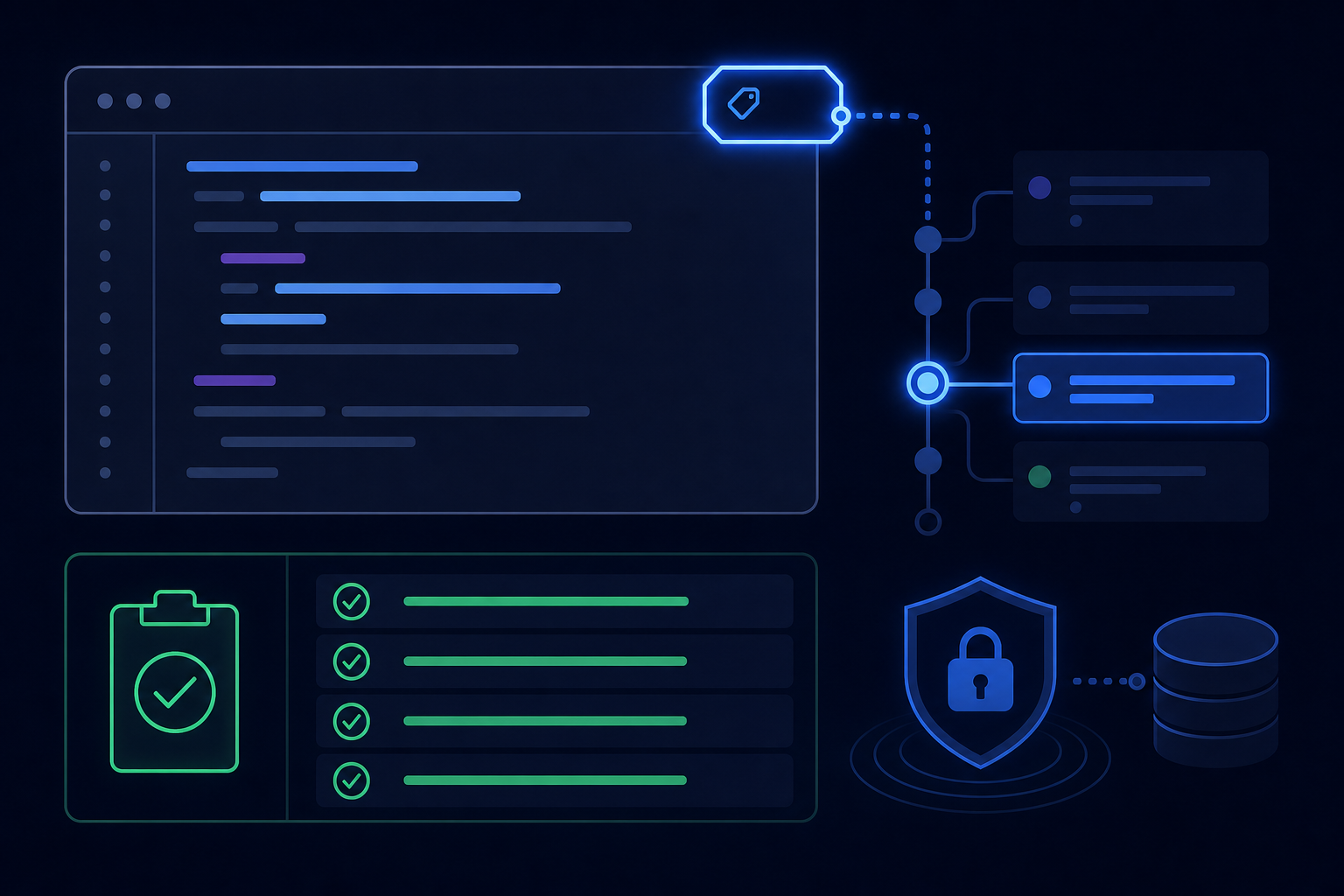
The most important shift is treating prompts as versioned artifacts, not strings in a config file or comments in a notebook. A prompt that drives a production workflow should be:
- Version controlled: every change tracked, with history
- Reviewed: prompt changes reviewed before deployment, the same as code changes
- Tested: a prompt change should run against the evaluation set before it ships
- Deployed separately: the ability to roll back a prompt independently of application code
Teams that treat prompts as "just text" discover this problem when a model provider quietly updates their model, the prompt that worked last week produces different output today, and there is no record of what changed or when.
Specificity beats cleverness
The most reliable prompts are the most specific ones. Clever techniques — chain of thought, few-shot examples, role-playing personas — work in demos and for genuinely complex reasoning tasks. For structured production tasks, specificity is more valuable.
A prompt that precisely defines the output format, provides explicit handling for edge cases, and states what to do when the task is ambiguous will outperform a clever prompt that works well on the average case but fails unpredictably at the edges.
Few-shot examples are the highest-leverage tool
For most production tasks, well-chosen few-shot examples are the single highest-leverage prompt engineering technique. Three to five examples of input/output pairs for the task — particularly examples that cover common edge cases — improve reliability more than any amount of instruction text.
The examples should represent the actual distribution of production inputs, not idealized clean examples. If 10% of your production inputs have typos or unusual formatting, your few-shot examples should include some.
Defensive prompting for structured output
For tasks that require structured output — classification, extraction, scoring — build defensive handling into the prompt itself:
- Specify the exact output format with an example
- Explicitly handle the "none of the above" case
- Specify what to do when the input is ambiguous or insufficient
- Include an instruction not to add explanation unless asked
The last point matters more than it sounds. A model that adds "Based on my analysis..." before the structured output will break a parser that expects clean JSON.
Evaluation-driven iteration
The right process for prompt improvement:
- Build an evaluation set of 50-200 representative inputs with labeled correct outputs
- Establish a baseline score on the current prompt
- Make one change at a time and re-evaluate
- Ship only changes that improve the evaluation score
"I tested it manually on a few examples and it looked better" is not an acceptable bar for production prompt changes. The evaluation set is the bar.
Model-specific prompt differences
Prompts are not model-agnostic. A prompt optimized for one model often produces degraded results on another. System prompt handling, instruction-following conventions, and response formatting differ meaningfully across providers.
This means prompt changes and model migrations are coupled — changing the provider requires re-evaluating and potentially re-tuning prompts for the new model's behavior.
AgentRuntime's step configuration model stores prompts as explicit, versioned artifacts per step, with the evaluation harness integrated into the deployment workflow. Join the waitlist for early access.